
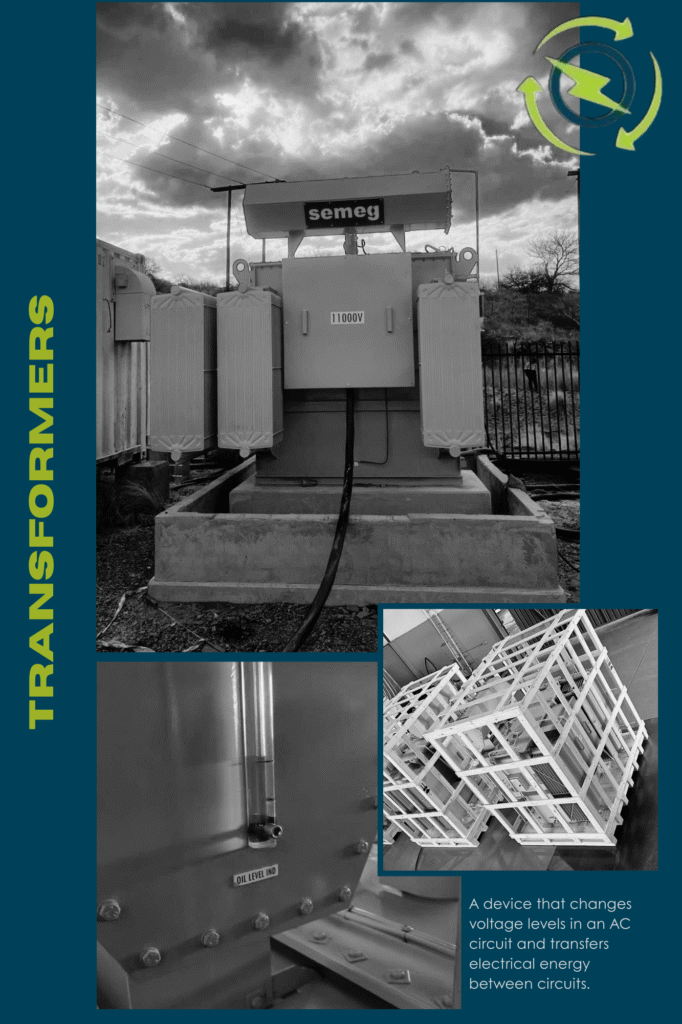
Transformers SANS 780 Ed5.1 and the Pursuit of Lower Losses
Stonebridge Electromechanical Engineering (Pty) Ltd (SEMEG), has positioned itself at the forefront of innovation in transformer technology, quality, and reliability in the realm of electrical engineering across Southern Africa. With a strong legacy built on engineering excellence and a clear vision of the future, SEMEG has established itself as a leader in the design, manufacture, and supply of advanced electromechanical solutions-most notably, power and distribution transformers that meet and exceed global best practices and standards.
We offer high-quality power, distribution transformers, and solar plant transformers – from dry type to pole-mounted units – serving a diverse range of industries. Our power transformers, with ratings up to 3150 kVA at 33 kV, are engineered to deliver efficient, reliable, and long-lasting performance for critical infrastructure applications.
…………………………………………………………………………………………………
Significance in Power Systems
Transformers serve as the backbone of electrical transmission and distribution networks. They play a pivotal role in stepping voltages up or down to facilitate the efficient and safe transportation of electrical energy from generating stations to end-users. The quality, reliability, and efficiency of transformers directly influence the performance, energy losses, and overall sustainability of power networks.
With increasing emphasis on energy efficiency, reducing transformer losses has become a critical objective for engineers and utilities worldwide. Lower losses translate into substantial cost savings, reduced environmental impact, and enhanced performance of power systems.
In South Africa, the design and manufacturing of distribution transformers are regulated by the SANS 780 standard. SANS (South African National Standard) 780 Ed5.1 is the fifth edition of this pivotal standard, which governs the technical requirements and performance specifications for oil-immersed distribution transformers. The standard ensures that transformers used in power distribution networks meets stringent criteria for safety, durability, efficiency, and environmental responsibility.
SANS 780 Ed5.1 incorporates the latest advancements and international trends in transformer design, with an emphasis on achieving lower total losses and aligning with the energy efficiency drive that is shaping policies across the globe. This standard sets minimum performance benchmarks for no-load and load losses, dielectric strength, temperature rise, and other critical parameters. By adhering to SANS 780 Ed5.1, manufacturers like SEMEG deliver transformers that are not only robust and long-lasting but also engineered for the lowest possible operational losses.
SEMEG design philosophy centres on the reduction of both no-load (core) and load (winding) losses, ensuring optimal performance over the service life of each transformer.
Design Innovations
Advanced Core Materials: SEMEG utilizes high-grade, cold-rolled grain-oriented silicon steel and other advanced core materials that minimize hysteresis and eddy current losses.
Optimized Winding Techniques: By employing precision winding methods and innovative conductor arrangements, SEMEG achieves reduced resistance and lower circulating currents, resulting in lower load losses.
Enhanced Cooling Systems: SEMEG’s transformers are designed with effective cooling arrangements, ensuring efficient heat dissipation and stable temperature rise, which extends the lifespan of insulation materials and further cut losses.
…………………………………………………………………………………………………
Key Features, Environmental and Economic Benefits
Voltage Regulation: Step-up or step-down voltage efficiently to match system requirements.
Reliability: Engineered to provide consistent performance under varying loads and environmental conditions.
Safety & Protection: Designed to protect electrical systems and equipment from overloads or faults.
Versatility: Available in a wide range of types, including power transformers, distribution transformers, and custom-engineered units.
Cost Savings: Over the operational life of a transformer, small improvements in efficiency can yield significant reductions in energy costs.
Reduced Energy Waste: Lower losses mean less energy is dissipated as heat, translating into higher overall system efficiency.
Lower Carbon Footprint: By reducing losses, SEMEG transformers contribute to sustainability goals, helping organizations comply with carbon reduction targets and environmental regulations.
…………………………………………………………………………………………………
Applications
Mining Applications
Hazardous Areas
Telecommunications
Power Generation Plants and Substations
Industrial Facilities and Manufacturing Plants
Renewable Energy Installations (solar, wind)
Commercial Buildings and Critical Infrastructure
Municipal Infrastructure
Agricultural Farming

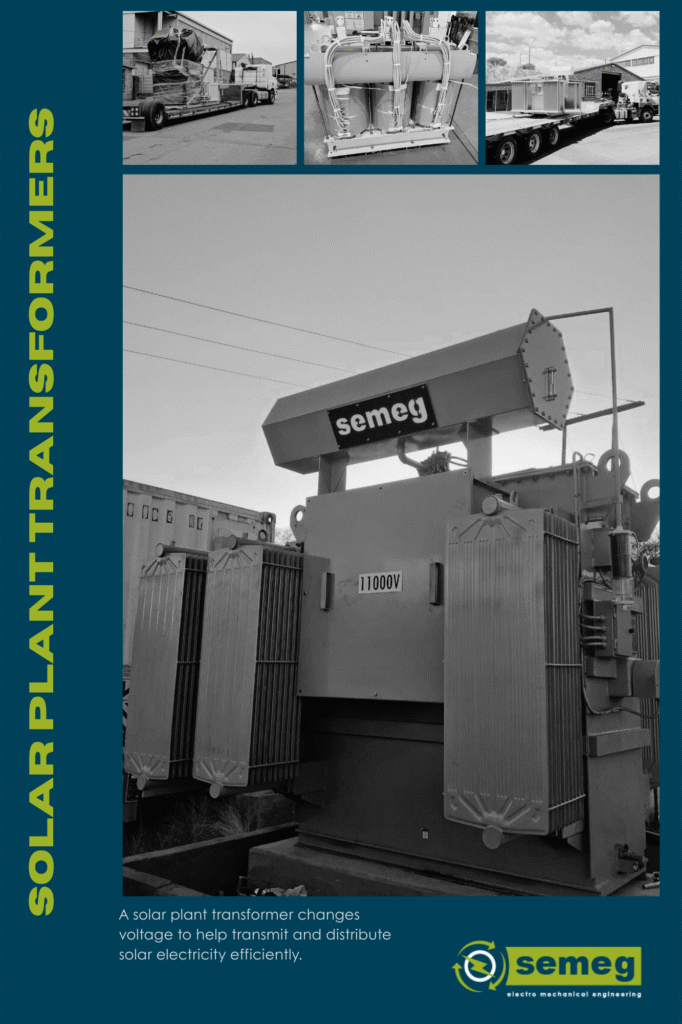
Solar Plant Transformers
Solar plant transformers are critical components in photovoltaic (PV) and concentrated solar power (CSP) systems, designed to efficiently step up or step-down voltage to match the requirements of the grid or storage systems.
These transformers ensure stable and reliable energy transfer, enabling solar plants to operate at maximum efficiency while maintaining grid compliance.
SEMEG’s solar plant transformers are engineered with high-efficiency cores, precision winding techniques, and advanced insulation systems to withstand fluctuating loads, variable environmental conditions, and continuous operation.
They are available in single-phase and three-phase configurations, with customization options to suit specific voltage ratings, power capacities, and site requirements.
Constructed from high-quality materials and rigorously tested for performance, safety, and durability, these transformers are ideal for utility-scale solar farms, commercial and industrial solar installations, and hybrid renewable energy systems.
SEMEG also provides comprehensive support, including installation, preventive maintenance, diagnostics, and repairs, ensuring long-lasting, reliable operation and optimal energy output.
………………………………………………………………………………………………………………………………………………………………………………………………………………………………………………………………………………………………………………………………………………………………………………………………………………………………………………………………………………………………………………………………………………………………………………………………………………………………………………………………………………………………………………………………………………………………………………………………………………………………………………………………………………………………………………………………………………………………………………………………………………………………………………………………………………………………………………………………………………………………………………………………………………………………………………………………………………………………………………………………………………………………………………………………………………………………………………………………………………………………………………………………………………………………………………………………………………………………………………………………………………………………………………………………….